Verbatim

Understanding Performance Differences: Silver vs. Aluminium Reflective Layers

The choice of reflective layer material in a blank CD or DVD is a critical factor influencing the disc's reliability. The reflective layer directs the laser beam back to the photosensor in the laser head. If this reflection is not precise and consistent, the disc may experience errors when writing or reading data.

Reflective layers are typically made from either aluminium or silver. Aluminium layers are generally less expensive, whereas silver layers offer superior reflectivity, improving both reading and writing performance. The key question is whether these performance benefits justify the higher price of silver-based media.

It's also important to consider that lasers in optical drives degrade over time, becoming less powerful. Therefore, understanding how well optical discs perform in both newer and older drives is crucial for evaluating long-term reliability.
High Failure Rates of Aluminium Media

Tests reveal notable differences in performance between aluminium and silver media. In tests with newer optical drives (under 1 year old), aluminium discs had a burning failure rate of over 10% for DVD-Rs and more than 13% for CD-Rs, compared to a zero-failure rate for silver discs. For older drives (over 1 year old), failure rates rose significantly—over 15% for DVD-Rs and over 25% for CD-Rs—while silver discs again showed zero failures.

Error rate tests further highlighted the disparity: silver-layer discs consistently met book specifications (DVD: PI sum8 < 280, CD-R: C1 < 220), while all aluminium discs fell outside these specifications, with higher error rates especially in older drives. These performance differences are directly linked to aluminium's lower reflectivity compared to silver.

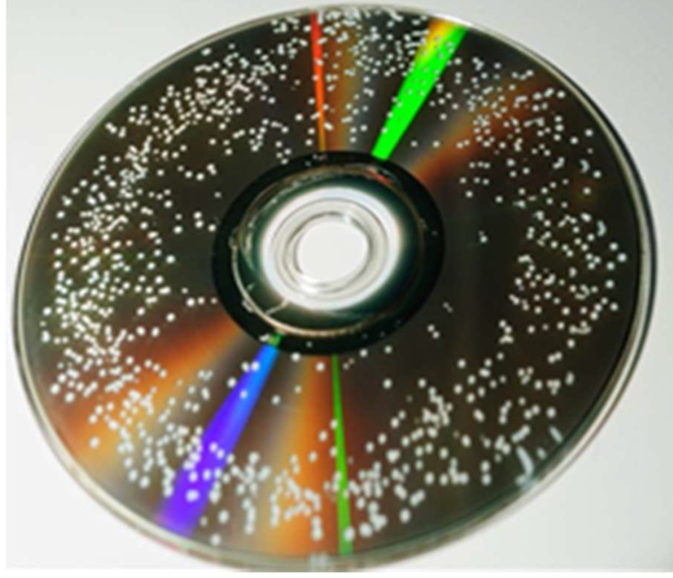
Example of severe corrosion in reflective layer of a disc

Corrosion and Durability

Optical media is also vulnerable to corrosion, especially during transit in high-temperature, humid environments such as sea freight. Aluminium oxidises when exposed to oxygen or moisture, which reduces reflectivity and can render the disc unreadable—a phenomenon known as "disc rot." Although silver can also corrode upon exposure to sulphur dioxide (an environmental pollutant that can enter the disc with moisture), silver discs have proven more resilient. In a 100-hour heat and humidity Reliability Test, all silver discs passed, while all aluminium CDs and DVDs failed to reach the 100-hour threshold.

Picture: Example of severe corrosion in reflective layer

Defective Rates for optical media using Aluminium or Silver Reflective Layers


CDR

DVD-R

Aluminium

Silver

Aluminium

Silver

Burning Failure Rate

(Drive < 1 year)

>13%

0%

>10%

0%

(Drive > 1 year)

>25%

0%

>15%

0%

Error Rate

CDR: C1<220

All out of spec.

Within book specification

All out of spec.

Within book specification

DVD: PIsum8<280

Reliability Test (80oC/80RH%) – 100 hours (*Simulated for 1 year longevity)

Shelf

Failed

Pass

Failed

Pass

Archive

Failed

Pass

Failed

Pass

Source: CMC Quality Comparison Test

Choose Silver for Optimal Performance

When purchasing blank media, the reflective layer material may not always be a primary consideration, yet this analysis demonstrates its importance. Aluminium’s lower reflectivity leads to significantly higher writing and reading failure rates, particularly when used with older drives or weaker lasers. Additionally, aluminium discs are more prone to corrosion and generate more heat during use, which can accelerate wear on the optical drive's reading head.

Given these factors, the slightly higher cost of silver-based media is a worthwhile investment for reliability and longevity.

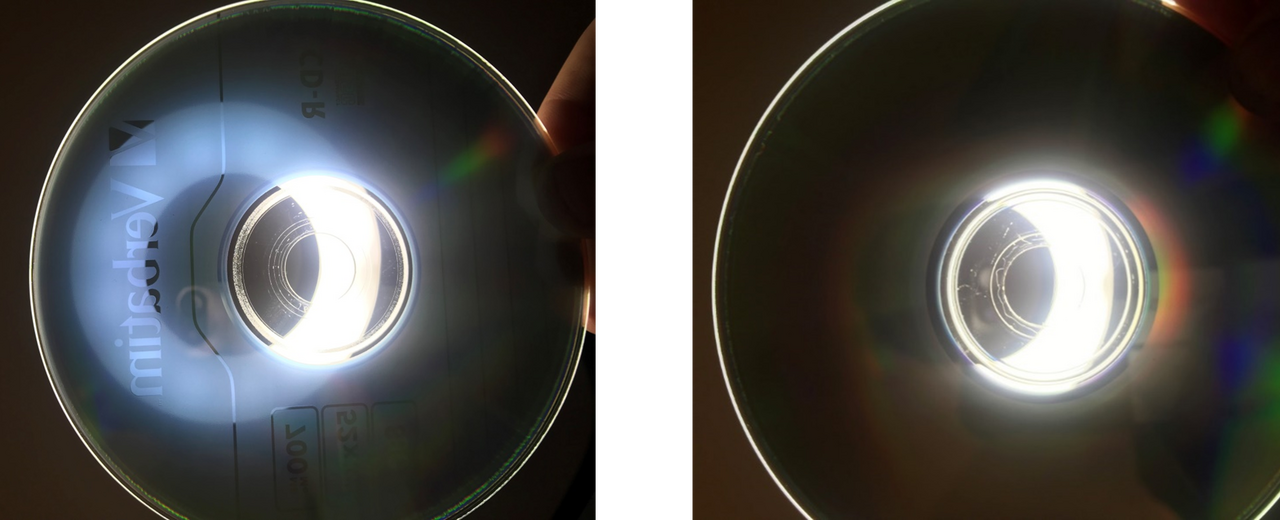
Identifying discs with Silver or Aluminium reflective layers

Left: Silver reflective layers are slightly see-though. Right: Aluminium reflective layer, non-see-through. 

  1. PI error (PIE): A byte error occurs when one or more bits in a byte have a wrong value, as compared to their original recorded value. A row of an ECC Block that has at least 1 byte in error constitutes a PI error, in any 8 consecutive ECC Blocks the total number of PI errors before correction shall not exceed the book specification of 280.

  2. Reliability test: The results represent continuous exposure to extreme temperature/humidity levels. The error rates are not representative of discs stored in typical, normal or ideal storage conditions. The results from these tests are to demonstrate, in terms of error rates, the ability of some DVD and CD media to maintain stability given these extreme conditions.